
COCKATOOS RESOURCES
A central hub for players, coaches, and supporters to learn, improve, get involved
A central hub for players, coaches, and supporters to learn, improve, get involved
-
Everything you need to know before your first session.
What to Expect
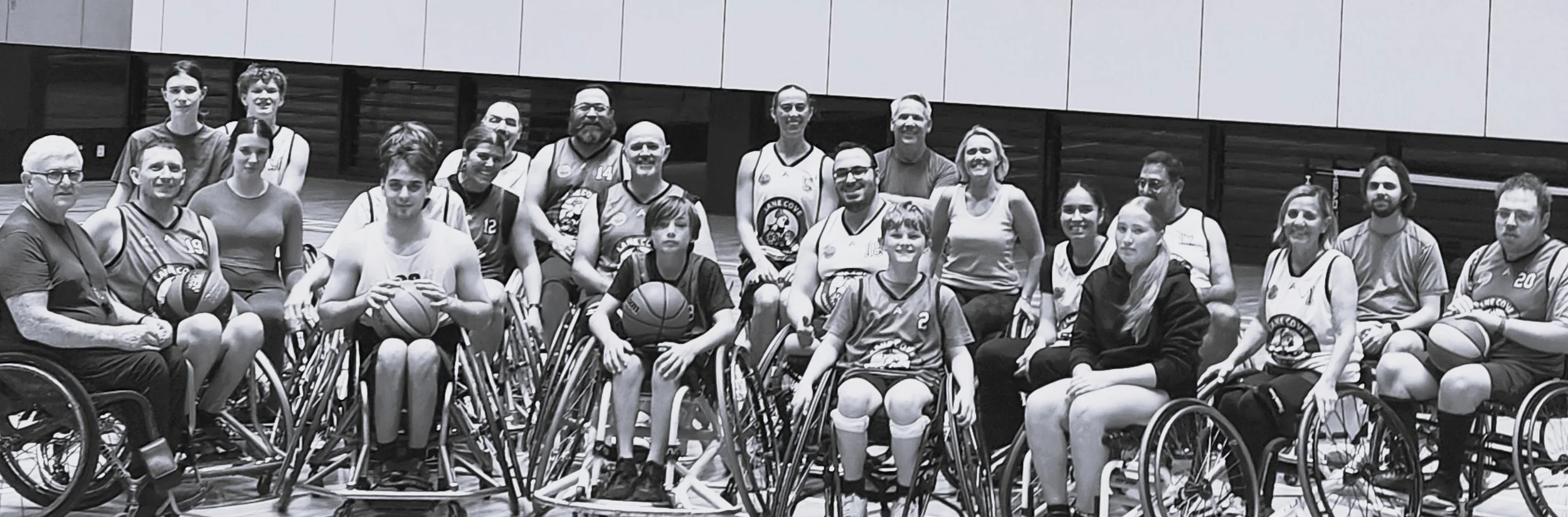
A welcoming, inclusive environment
A mix of new and experienced players
Basic drills, skill development, and game play
Guidance from experienced coaches and players
Who Can Play
Open to people with and without disabilities
All ages and experience levels welcome
Juniors, women, and first-time players encouraged
What to Bring
Comfortable sports clothing
Water bottle
A personal sports wheelchair (if you have one)
We can provide sports wheelchairs for new players.
Your First Session
Arrive 10-15 minutes early
Introduce yourself to a coach or volunteer
We’ll help you get set up and comfortable
We’ll set you up with a sports wheelchair if you don’t have your own
No pressure - just come and give it a try
Cost
Sessions are currently free
Location & Time
Training held at Galuwa Recreation Centre
180 River Rd, Lane CoveAges 5 to 12: 4.45 to 5.30pm
Everyone else: 5.30 to 7.30pm
Do I Need Experience?
No experience needed
We’ll teach you the basics and build from there
If you’re unsure about anything, just reach out and we’ll be happy to help.
-
We focus on building core skills, confidence, and game awareness in a supportive and structured environment.
Sessions are designed for all levels, from first-time players through to those looking to compete.
Core Skills We DevelopChair control
Learning how to move efficiently, stop, turn, and accelerate in a sports wheelchair.Ball handling
Dribbling while moving, stopping while dribbling, maintaining control under pressure, and transitioning between skills.Passing
Chest passes, bounce passes, overhead passes, and moving the ball effectively as part of a team.Shooting
You’ll learn set shots, layups and free throws. This includes technique, positioning, and consistency from different areas of the court.
Typical Training SessionsEach session is structured to help players improve while enjoying the game:
Warm-up and mobility work
Skill-based drills
Small group activities
Game play and match scenarios
Social games
Example DrillsChair Control Circuit
A series of cones set up to practice turning, stopping, and accelerating.
Builds confidence and control in the chair.Passing in Motion
Players move up the court while passing in pairs or small groups.
Develops coordination, timing, and teamwork.Shooting Under Pressure
Players take shots after movement or defensive pressure.
Improves accuracy and game-like decision making.
ProgressionAs players develop, sessions introduce:
More complex drills
Game strategy and positioning
Competitive match play
Players can progress into local competitions and beyond as their skills grow.
-
Wheelchair basketball follows a structured set of rules designed to ensure fair, competitive, and inclusive play. While many aspects of the game are similar to able-bodied basketball, there are key differences specific to wheelchair use and player classification.
Key Rules OverviewTravelling (Wheelchair Rule)
Players are allowed two pushes of their wheelchair while holding the ball. After that, the ball must be passed, dribbled, or shot.Dribbling
A player must bounce the ball to the floor after every one or two pushes to maintain a legal dribble.Out of Bounds
The game follows standard basketball rules - the ball is out when it crosses the boundary lines or contacts an out-of-bounds surface.Contact
Wheelchair basketball is considered a non-contact sport. However, some chair contact may occur during play. Fouls are called where contact provides an unfair advantage or is deemed unsafe.Scoring
Scoring is the same as standard basketball:2 points for field goals
3 points for shots outside the arc
1 point for free throws
Classification System
Players are assigned a classification from 1.0 to 4.5 based on functional ability.
Lower numbers = greater physical impairment, eg, a high spinal injury
Higher numbers = greater functional ability, eg, a lower limb amputee
Teams on court must stay within a set total classification limit ensuring fair and balanced competition. Internationally, it’s 14 points. Local competitions tend to be more generous so as to allow several able-bodied players to get on court at the same time, because all able-bodied players are treated as 4.5.
Official Rules
For the full set of rules and regulations, refer to the official rule book from the International Wheelchair Basketball Federation:
Important Note
This is a simplified overview. During training and competition, players will be guided through the rules by coaches and officials as they develop their understanding of the game.
-
Our Club Policies and Code of Conduct help ensure the Cockatoos remain a safe, fair and welcoming club for everyone.
They cover three key areas:
Safety - creating a safe environment for players, particularly children and vulnerable participants.
Respect & Fairness - treating everyone with respect and inclusion, regardless of age, ability or background.
No Bullying or Abuse - bullying, harassment, discrimination, threats or unsafe behaviour will not be tolerated.
Everyone who participates in Cockatoos activities is expected to understand and follow these standards.
-
Ready to join the Cockatoos?
Complete our online Membership Form to become a Club member. It takes just a few minutes and gives us the information we need to support your participation.
Parents and guardians can follow the link on the Membership page to complete the correct form for Junior Members.